
Diagnose benign paroxysmal positional vertigo involving the anterior canal
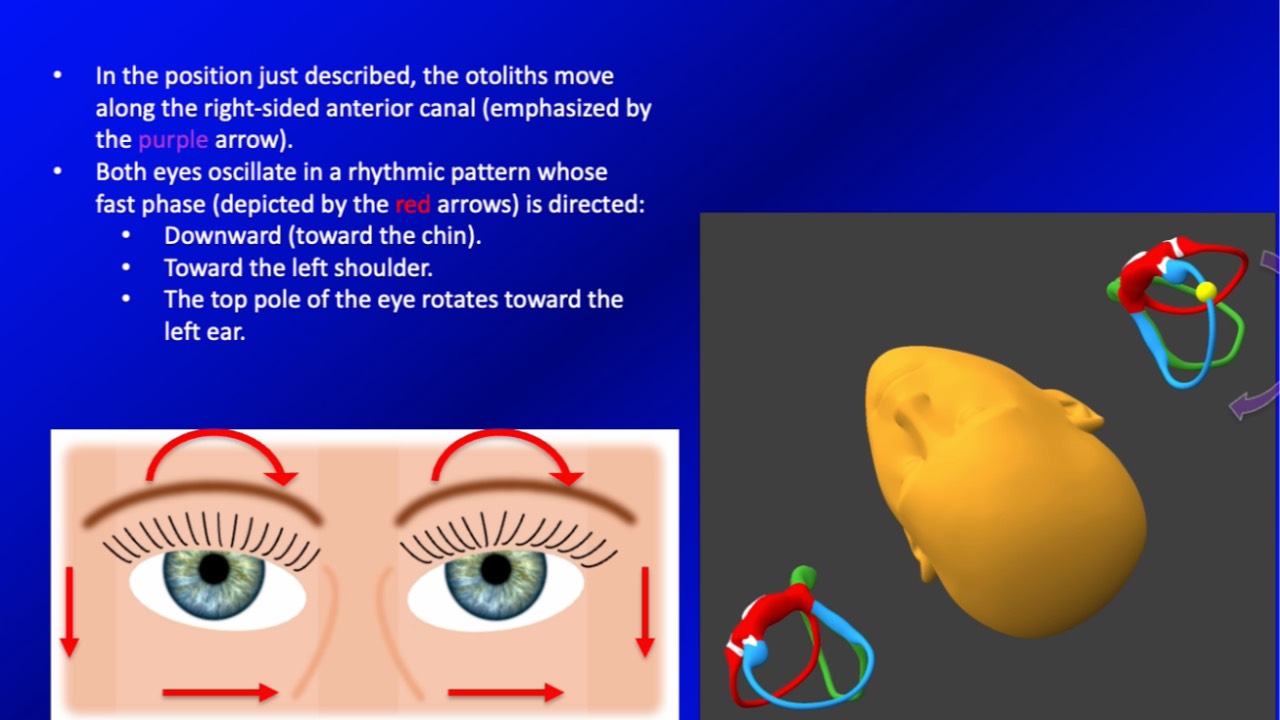
Anterior canal BPPV is the rarest form of BPPV — and arguably the most challenging to diagnose. Its characteristic eye movement pattern is unfamiliar even to many specialists, and it is frequently misattributed to central causes of vertigo, leading to unnecessary and costly investigations. Identifying it correctly requires knowing exactly what to look for — and having seen it before. In this course, we teach you to identify anterior canal BPPV with confidence: we display and explain the diagnostic eye movements that confirm the diagnosis and distinguish it from other BPPV variants and from more serious conditions, so that when treatment begins, it begins in the right direction.
This course is designed for three audiences. For patients who have been evaluated repeatedly without a satisfying explanation for their symptoms, it offers a window into what the correct diagnostic process looks like — and whether this rare variant was ever considered. For clinicians who want to extend their nystagmus recognition skills beyond the more familiar canal variants, it provides the visual grounding that is genuinely difficult to find elsewhere — online resources covering anterior canal eye movements in clinical detail are exceptionally rare. And for anyone preparing to take our treatment course, it provides the diagnostic foundation that makes treatment selection rational rather than arbitrary.
If you already know your diagnosis and are ready to move straight to treatment, our treatment-only course covers the Yacovino maneuver for both right- and left-sided anterior canal BPPV at a lower cost. But if there's any uncertainty about which canal is involved — or whether a central cause has been appropriately excluded — this is the right place to start.
This material is intended for educational purposes only, and does not substitute evaluation by a qualified medical professional.
In developing this course we reviewed literature (so that you don't have to!)
Literature that may be useful for patients:
- Bastani P, Phillips V, Rieiro H, Otero-Millan J, Zee D, Newman-Toker D, Tehrani A (2025) Feasibility of Using Smartphone Eye-Tracking for Self-recording Positional Tests. Digital Biomarkers: 1-11. doi: 10.1159/000545720
- Melliti A, van de Berg M, van de Berg R (2023) Capturing nystagmus during vertigo attacks using a smartphone: adherence, characteristics, pearls and pitfalls. J Neurol. doi: 10.1007/s00415-023-11965-y
- Phillips V, Bastani PB, Rieiro H, Hale DE, Otero-Millan J, Zee DS, Newman-Toker DE, Tehrani AS (2025) A Pilot Study of Smartphone Eye Tracking for Detection of Positional Nystagmus. Digit Biomark 9: 124-129. doi: 10.1159/000547008
- von Brevern M, Radtke A, Lezius F, Feldmann M, Ziese T, Lempert T, Neuhauser H (2007) Epidemiology of benign paroxysmal positional vertigo: a population based study. J Neurol Neurosurg Psychiatry 78: 710-5. doi: 10.1136/jnnp.2006.100420
Literature for specialists who want to dig deeper:
- Fife TD (2012) Positional dizziness. Continuum (Minneap Minn) 18: 1060-85. doi: 10.1212/01.CON.0000418376.80099.24
- Shah MU, Lotterman S, Roberts D, Eisen M (2019) Smartphone telemedical emergency department consults for screening of nonacute dizziness. Laryngoscope 129: 466-469. doi: 10.1002/lary.27424
- Teixido M, Woods O, Kung B, Seyyedi M (2016) A 3D benign paroxysmal positional vertigo model for study of otolith disease. World J Otorhinolaryngol Head Neck Surg 2: 1-6. doi: 10.1016/j.wjorl.2016.02.002
- Traboulsi H, Teixido M (2021) BPPV Viewer: A downloadable 3D BPPV model for study of otolith disease. World Journal of Otorhinolaryngology - Head and Neck Surgery 7: 34-39. doi: 10.1016/j.wjorl.2018.10.001
- Yacovino DA, Hain TC, Gualtieri F (2009) New therapeutic maneuver for anterior canal benign paroxysmal positional vertigo. J Neurol 256: 1851-5. doi: 10.1007/s00415-009-5208-1
