
Is this the future of management for BPPV?
Jun 28, 2026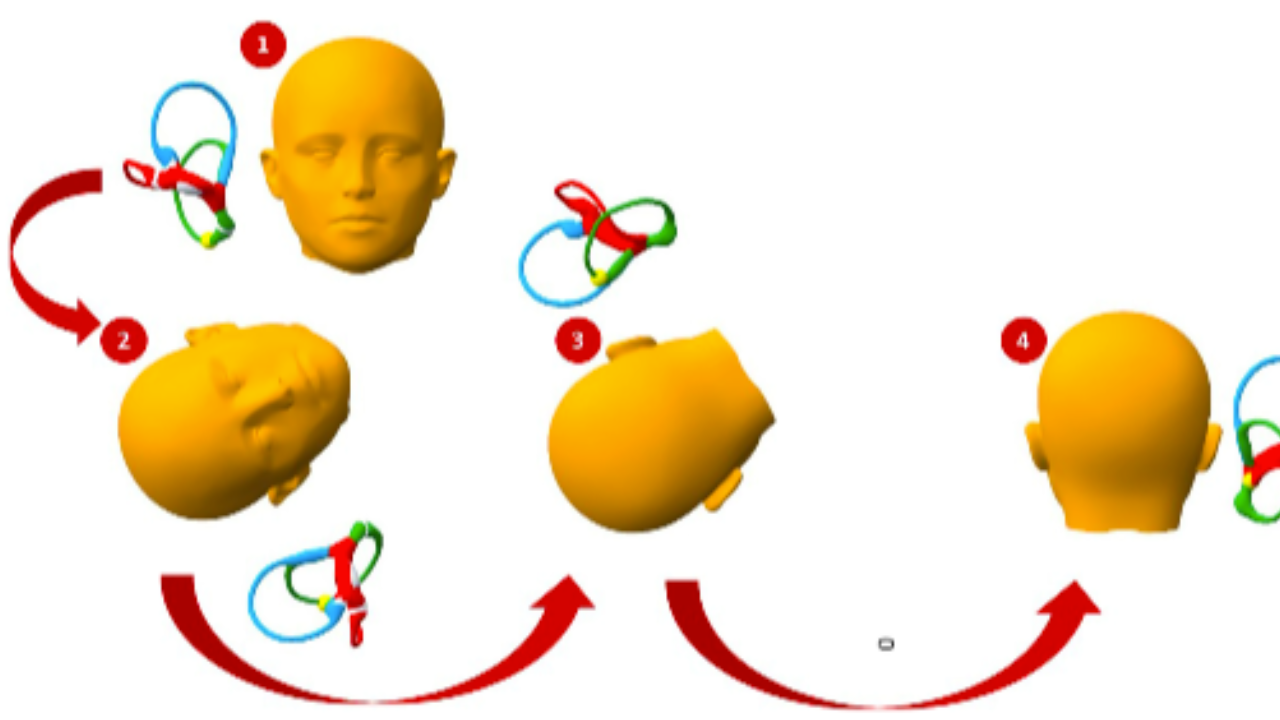
Benign paroxysmal positional vertigo (BPPV) is the most common cause of the symptom of disequilibrium, and also one of the most treatable.
The diagnosis of BPPV is based on an examiner’s observation of a specific pattern of eye movements. Those eye movements not only confirm that BPPV is present, but also help the examiner “localize” the problem, meaning that it tells the examiner which ear(s) and canal(s) is affected by BPPV.
Those tasks (recognizing the diagnostic eye movement, and choosing the appropriately-targeted maneuver) can be difficult. Several investigators have tried to simplify the diagnostic and therapeutic process by devising maneuvers that treat multiple canals simultaneously.
Since these “multi-canal” maneuvers might treat multiple canals simultaneously, it simplifies both the diagnostic process (since there is less of a need to examine eye movements) and the therapeutic process (since there is less of a need to choose a specifically targeted maneuver).
The main maneuvers of this type that have been proposed so far include:
- The “Universal repositioning maneuver” (Barreto RG, Yacovino DA, Cherchi M, Teixeira LJ, Nader SN, Leão GF (2023) Universal repositioning maneuver: a new treatment for single canal and multi-canal benign paroxysmal positional vertigo by 3-dimensional model analysis. Journal of International Advanced Otology 19: 242-247. doi: 10.5152/iao.2023.22921; https://www.advancedotology.org/index.php/pub/article/view/1705, https://pubmed.ncbi.nlm.nih.gov/37272643/).
- The “Unilateral triple canal repositioning maneuver” (Cherchi M (2025) Unilateral triple canal repositioning maneuver: principles and design. Audiol Res 15. doi: 10.3390/audiolres15030055; https://www.mdpi.com/2039-4349/15/3/55, https://pubmed.ncbi.nlm.nih.gov/40407669/).
- A maneuver (“Omni repositioning maneuver”) with similar goals is being studied by Prof. Richard Rabbitt (https://otology.bme.utah.edu/bppv-crm/).
Invention of these maneuvers has been facilitated by computerized modeling of BPPV — a tool which was not available when treatment maneuvers began to be devised back in the 1990s (such as the Epley maneuver in 1992).
Note that as of this writing, these maneuvers have not been studied in clinical trials, so they remain EXPERIMENTAL, and are NOT yet part of routine clinical practice. If appropriate scrutiny and testing show these maneuvers to be successful, then it may offer an easier path to diagnosing and managing this common disease.